
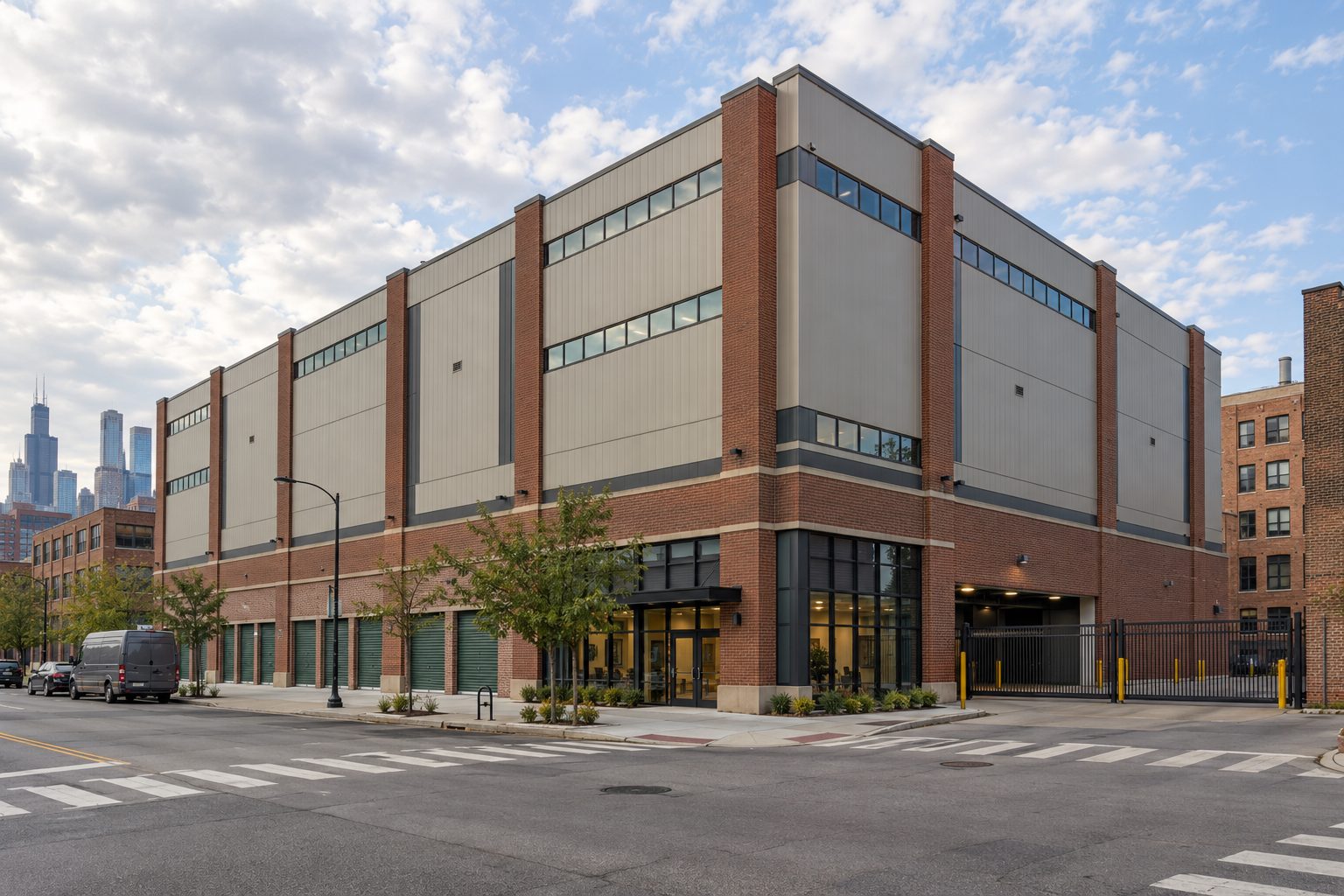
Understand the Demand. Evaluate the Income. Unlock the Opportunity.
From established storage facilities to expansion and development opportunities, One West Group helps owners, investors, and owner-operators evaluate the asset, understand its performance, and execute a clear strategy.
More Than Units. A Business Built Around Local Demand.
Self-storage combines real estate ownership with an operating business driven by location, accessibility, customer demand, and day-to-day execution.
Unit mix, rental pricing, occupancy, collections, and operating costs all influence performance. We help clients evaluate these factors alongside the physical property and competitive market—whether they’re selling a facility, making an acquisition, or planning their next investment.
Self-storage value depends on both the property and the operation. Reported occupancy, advertised rents, and projected revenue growth need to be evaluated against collections, expenses, competition, and the capital required to execute the plan.
One West Group helps clients connect those details. We organize the analysis around current performance, realistic opportunities, and the risks that deserve closer investigation.
Advisory Across the Self-Storage Investment Cycle.
A focused approach to understanding the market, assessing the operation, and positioning the property for its next owner.
Self-Storage Investment Sales
Position your facility around its location, operating history, physical characteristics, and investment potential. We develop the pricing and marketing strategy, qualify prospective buyers, and guide negotiations through due diligence and closing.
Acquisition & Owner-Operator Advisory
Identify facilities aligned with your budget, operating approach, and investment objectives. We help buyers evaluate income, expenses, competitive supply, property condition, and the resources required after closing.
Property Valuation & Strategy
Assess your facility’s market position through operating income, comparable transactions, occupancy, rental performance, and capital requirements. Our broker’s opinion of value helps inform pricing, timing, and ownership decisions.
Revenue & Operating Performance Review
Review available unit-level reports, rental collections, concessions, delinquency, ancillary income, and operating expenses. We help distinguish documented results from projected gains in rents, occupancy, or operating efficiency.
Value-Add & Expansion Analysis
Assess opportunities involving underutilized space, unit reconfiguration, facility improvements, or additional storage capacity. Potential upside is evaluated alongside demand, construction costs, approvals, and execution risks.
Development & Conversion-Site Advisory
Help clients evaluate sites and existing buildings for potential self-storage development or conversion. Market feasibility, access, design, construction, and entitlement assumptions are investigated with qualified specialists.
Portfolio Acquisitions & Dispositions
Evaluate individual facilities within a broader investment strategy. We help clients compare geographic exposure, operating performance, facility formats, and capital needs when acquiring or selling a portfolio.
1031 Exchange Coordination
Align an investment property sale with the replacement-property search. We coordinate with your qualified intermediary, lender, and tax and legal advisors to support your objectives and transaction timeline.
Storage Properties Across Formats and Scale.
Each facility serves a distinct customer base and requires an approach shaped by its configuration, location, and operating model.
- Traditional Drive-Up Self-Storage
- Climate-Controlled Storage Facilities
- Multi-Story & Elevator-Served Properties
- Mixed-Format Storage Facilities
- RV & Boat Storage Properties
- Enclosed Vehicle Storage
- Self-Storage Portfolios
- Expansion & Repositioning Opportunities
- Development Sites & Conversion Candidates
Proposed storage uses, expansion capacity, and conversion potential are evaluated individually and remain subject to property-specific due diligence and required approvals.
Look Beyond the Occupancy Rate.
A well-occupied facility can still have collection issues, below-market income, or significant capital needs. We help clients examine the factors behind reported performance.
Trade Area & Customer Demand
The surrounding residential and business customer base, housing patterns, accessibility, and local demand for different storage formats.
Competitive Supply
Existing facilities, competing unit sizes, pricing, concessions, amenities, and proposed projects that may affect the property’s position.
Unit Mix & Rentable Area
The number, size, and type of units; rentable square footage; climate-controlled space; and the relationship between inventory and customer demand.
Physical & Economic Occupancy
Review occupied units and occupied rentable area separately from revenue-based occupancy measures. Confirm how each reported metric is calculated.
Rental Rates & Collections
Advertised rates, actual in-place rents, discounts, delinquency, bad debt, and collected revenue to understand what the facility earns.
Operating Expenses & Management
Staffing, property taxes, insurance, utilities, repairs, software, marketing, and management costs required to operate the facility.
Access, Security & Customer Experience
Entry systems, circulation, loading, lighting, surveillance, elevators where applicable, and the convenience of using the property.
Condition & Capital Requirements
Roofs, doors, paving, drainage, building systems, climate-control equipment, and anticipated repair or replacement needs.
Expansion & Land-Use Potential
Available land or space, site constraints, zoning, access, and approvals that may influence future improvements or additional capacity.
From Facility Review to Closing.
Define Your Objectives
Establish your acquisition or disposition goals, target markets, operating approach, budget, and timeline.
Evaluate the Asset
Review facility inventory, occupancy, collections, operating expenses, property condition, and competing supply.
Validate the Opportunity
Investigate financial records, physical systems, contracts, land-use requirements, and assumptions supporting improvements or expansion.
Execute & Coordinate the Transition
Guide negotiations and closing while coordinating the transfer of applicable rental records, deposits, operating systems, and other agreed transaction components.
Frequently Asked Questions
What types of self-storage properties do you advise on?
Our focus includes drive-up facilities, climate-controlled and multi-story properties, mixed-format facilities, RV and boat storage, portfolios, and potential development or conversion opportunities.
How do you evaluate a self-storage facility’s value?
We consider operating income, rental collections, occupancy, unit mix, location, comparable transactions, property condition, and capital requirements. Competitive supply and the reliability of projected improvements are also important.
What is the difference between physical and economic occupancy?
Physical occupancy generally measures occupied units or occupied rentable area as a percentage of the available inventory. Economic occupancy measures revenue performance against a defined potential revenue figure. Reporting methods vary, so the underlying calculations should be confirmed before comparing facilities.
What information should I prepare before selling?
Useful materials include the unit inventory, rent roll, historical operating statements, occupancy reports, rental collections, delinquency reports, and capital improvement history. Available surveys, site plans, management agreements, and software reports also support the review.
Do high advertised rents mean the facility is collecting that amount?
Not necessarily. Advertised rates may differ from existing customer rents, promotional rates, and actual collections. We review the available records to distinguish asking rates from income received.
Can you help buyers who plan to operate the facility themselves?
Yes. We help owner-operators evaluate acquisition opportunities based on their capital, experience, operating plans, and investment goals. Management systems, staffing, working capital, and transition requirements should be assessed before closing.
What should investors review beyond the cap rate?
Review income quality, concessions, delinquency, expense assumptions, future capital needs, and competitive supply. Buyers should also examine management costs and whether projected rent or occupancy gains are supported by the market.
Can an existing facility be expanded?
Potential expansion depends on available land or building space, demand, access, site conditions, zoning, and required approvals. Development costs and operating disruption should be evaluated with qualified professionals.
Can another type of building be converted to self-storage?
Some buildings may be suitable, but feasibility depends on layout, structural capacity, access, fire protection, climate-control requirements, land use, construction costs, and market demand. A conversion requires property-specific analysis.
Can self-storage be considered for a 1031 exchange?
Self-storage real estate may be considered, subject to applicable requirements. Your qualified intermediary and tax and legal advisors should confirm eligibility, transaction structure, and the treatment of any non-real-estate assets.
What’s Next for Your Self-Storage Investment?
Selling a facility, acquiring your next property, or evaluating an expansion opportunity? Let’s review the asset, understand your objectives, and develop a clear path forward.