
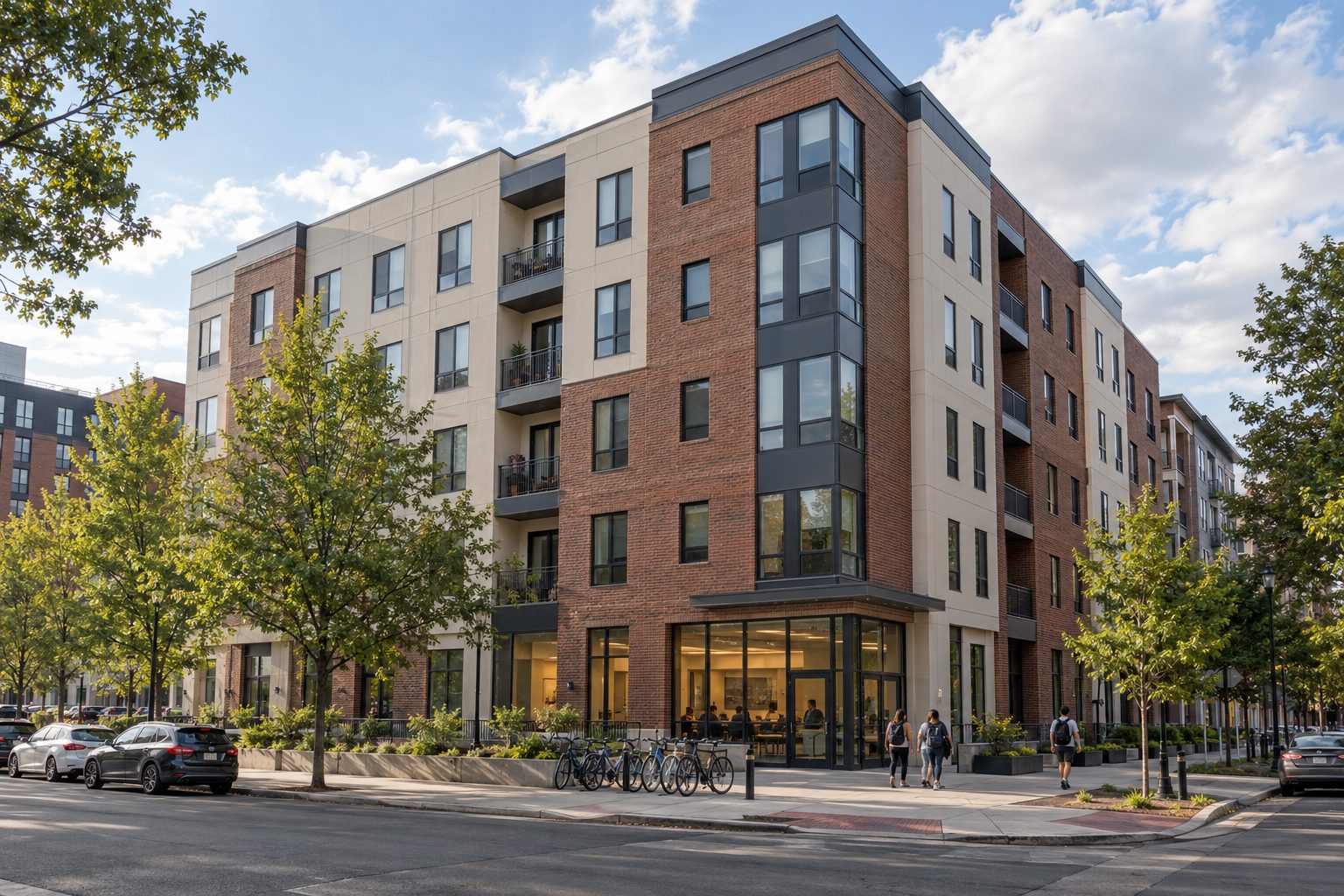
Campus Demand. Property Performance. Investment Opportunity.
From off-campus apartments to purpose-built student housing communities, One West Group helps owners and investors evaluate demand, understand operating performance, and develop a clear acquisition or disposition strategy.
Understand the Campus. Evaluate the Community.
Student housing connects residential real estate with the dynamics of a university market. Enrollment, campus accessibility, housing availability, affordability, and student preferences all influence demand.
The property’s leasing model and operating requirements matter just as much. We help clients evaluate these factors together—from smaller buildings serving nearby students to larger communities designed around the academic calendar.
Student housing performance depends on more than filling rooms. The timing of leasing, reliability of collections, cost of turnover, and strength of the surrounding university market all influence the investment.
One West Group helps clients connect these operating details with the real estate fundamentals. We evaluate documented results, identify assumptions that need further support, and organize the transaction around the issues that matter.
Advisory Across the Student Housing Investment Cycle.
A focused approach to evaluating the market, positioning the property, and coordinating the transaction.
Student Housing Investment Sales
Position your asset around its location, leasing performance, physical condition, and competitive standing. We develop the pricing and marketing strategy, qualify buyers, and guide negotiations through due diligence and closing.
Acquisition Advisory
Identify and evaluate properties aligned with your investment criteria. We help buyers assess campus demand, leasing structure, operating expenses, capital requirements, and the assumptions supporting future performance.
Property Valuation & Strategy
Understand your property’s market position through operating income, comparable transactions, leasing results, and competing inventory. Our broker’s opinion of value helps inform pricing, timing, and ownership decisions.
Leasing & Operating Performance Review
Review available occupancy reports, preleasing activity, rental collections, concessions, turnover costs, and operating statements. We help distinguish current performance from projections and identify questions for further due diligence.
Value-Add & Repositioning Analysis
Assess opportunities involving dated interiors, amenity upgrades, operating improvements, or a revised market position. We evaluate potential upside alongside renovation costs, leasing disruption, approvals, and execution risks.
Development-Site Advisory
Help clients evaluate potential student housing sites based on campus access, surrounding uses, competitive supply, and proposed development objectives. Feasibility and entitlement assumptions are reviewed with the appropriate specialists.
Portfolio Acquisitions & Dispositions
Evaluate individual assets within a broader student housing strategy. We help clients compare university exposure, property performance, capital needs, and geographic concentration when acquiring or selling a portfolio.
1031 Exchange Coordination
Align the investment property sale and replacement-property search with your objectives. We coordinate with your qualified intermediary, lender, and tax and legal advisors throughout the transaction process.
Student Housing Across Formats and Scale.
Different properties serve different student populations and ownership strategies. We tailor the approach to the asset’s configuration, leasing model, and market.
- Purpose-Built Student Housing Communities
- Privately Owned Off-Campus Apartments
- Smaller Multifamily Properties Serving Student Demand
- Student-Oriented Townhome Communities
- Individual-Bedroom & Shared-Living Configurations
- Student Housing Portfolios
- Renovation & Repositioning Opportunities
- Potential Student Housing Development Sites
Property use, occupancy arrangements, and leasing structures are evaluated individually. University affiliation is represented only when documented.
Look Beyond the Distance to Campus.
Proximity matters, but a sound investment requires a broader understanding of demand, supply, affordability, and operating execution.
University & Enrollment Profile
Enrollment trends, student composition, academic programs, and the institution’s role in generating demand for nearby housing.
Campus Access & Daily Convenience
Walkability, transit, shuttle access, commuting conditions, and proximity to services students use regularly.
Competitive Housing Supply
Existing off-campus inventory, university-operated housing, planned developments, and differences in rents, amenities, and location.
Leasing Model & Revenue Structure
Whether leases are structured by the bed or by the unit, lease duration, utility arrangements, ancillary income, and any guarantor provisions.
Preleasing & Academic-Year Timing
Leasing progress for the upcoming academic year, renewal activity, move-in schedules, and exposure to missed leasing periods.
Occupancy & Collections
Physical occupancy, leased occupancy, concessions, delinquency, and actual rental collections. These measures are reviewed separately to understand performance.
Operating Costs & Turnover
Management, maintenance, utilities, marketing, security, furniture replacement, and the cost of concentrated resident turnover.
Condition & Capital Requirements
Unit interiors, building systems, common areas, furnishings, amenities, and improvements needed to remain competitive.
A Clear Strategy from Review to Closing.
Define Your Objectives
Establish your acquisition or disposition goals, preferred markets, investment budget, financing approach, and timeline.
Evaluate the Asset & Market
Review campus demand, competing inventory, leasing performance, operating results, and property condition.
Validate the Assumptions
Investigate leases, preleasing reports, collections, expenses, capital requirements, and applicable property-use restrictions.
Execute the Transaction
Guide negotiations and closing while coordinating information and requirements related to management, resident records, and the ownership transition.
Frequently Asked Questions
What qualifies a property as student housing?
Student housing can include purpose-built communities and conventional residential properties that primarily serve students. The operating model, physical configuration, location, and applicable property-use requirements should be evaluated individually.
Does a property near a university have a formal university affiliation?
Not necessarily. Many student-oriented properties are privately owned and operate independently. Any affiliation, referral arrangement, master lease, or university agreement should be confirmed through documentation.
What is the difference between leasing by the bed and leasing by the unit?
By-the-bed leasing generally assigns a separate lease to an individual resident for a designated bedroom or bed space, with shared common areas. By-the-unit leasing rents the entire unit under one lease. The structure affects revenue analysis, vacancy exposure, administration, and operating requirements.
How do you evaluate a student housing property’s value?
We consider location, university demand, leasing structure, operating income, occupancy, comparable transactions, physical condition, and anticipated capital needs. We also examine preleasing progress and how the property competes with other housing options.
What information should I prepare before selling?
Useful documents include the rent roll or bed inventory, leases, historical operating statements, occupancy and collection reports, current preleasing results, and capital improvement records. Management agreements, utility arrangements, and any documented university agreements are also relevant.
Why is preleasing important?
Preleasing provides visibility into commitments for an upcoming leasing period. It should be reviewed alongside lease execution, cancellations, concessions, collections, and the comparable point in prior leasing cycles. A strong preleasing percentage alone does not establish profitability.
How does student housing differ from conventional multifamily?
Depending on the property, student housing may involve individual-bedroom leases, furnished accommodations, academic-year leasing patterns, and concentrated move-in and move-out periods. These features can create different staffing, marketing, maintenance, and capital requirements.
Can conventional apartments be repositioned as student housing?
Some properties may be suitable, but feasibility depends on location, layout, demand, occupancy rules, leasing restrictions, approvals, and operating costs. Proposed changes should be evaluated with qualified legal, land-use, design, and operating professionals.
Do you advise on larger communities and portfolios?
Yes. Our approach includes evaluating property-level performance alongside exposure to individual universities, geographic concentration, competitive supply, and capital requirements.
Can student housing be considered for a 1031 exchange?
Student housing real estate may be considered for a 1031 exchange, subject to the applicable requirements. Your qualified intermediary and tax and legal advisors should confirm eligibility, transaction structure, and the treatment of any furnishings or other non-real-estate assets.
What’s Next for Your Student Housing Investment?
Selling an off-campus property, acquiring a student housing community, or evaluating a development opportunity? Let’s review the market, the asset, and your objectives.